What’s the oldest things you’re wearing today?
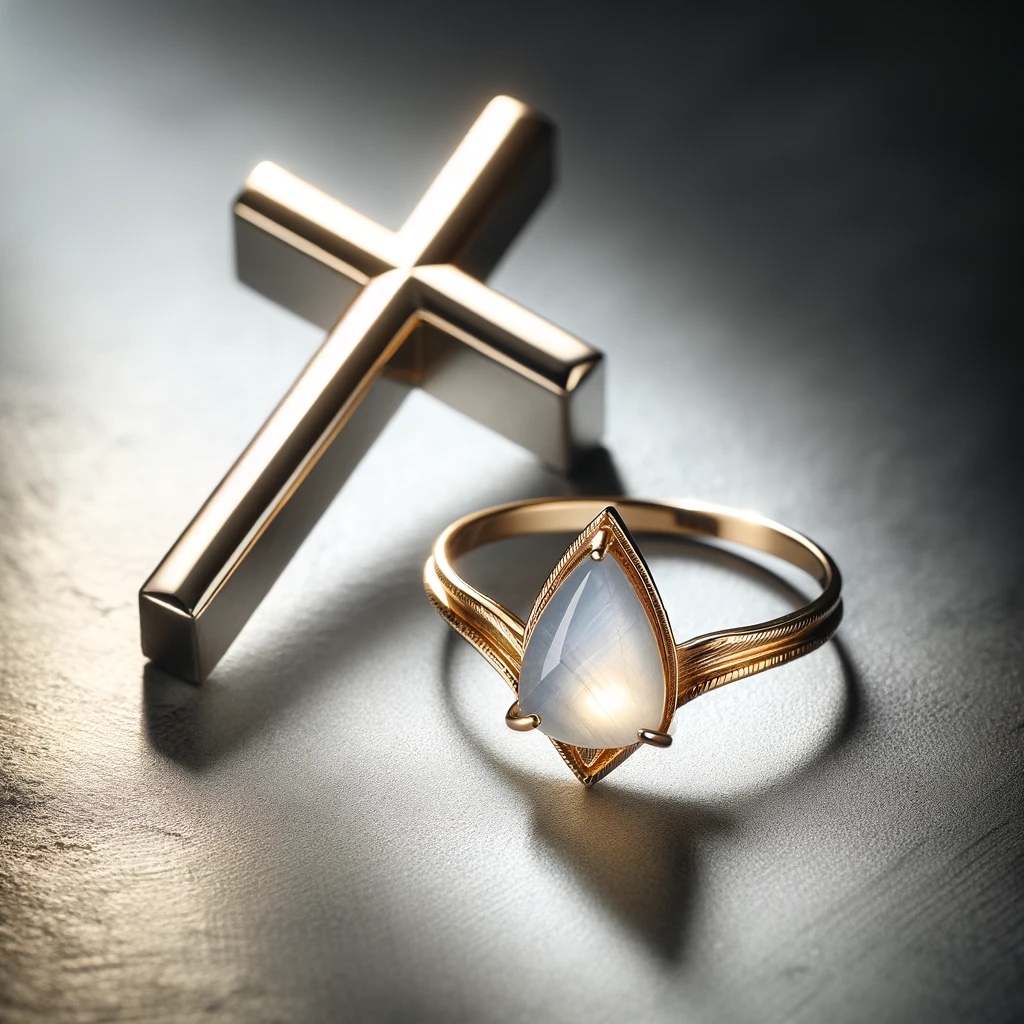
Of all the things I am wearing today, probably the oldest are my engagement ring and my silver cross – purely because they are made of moonstone, diamond, gold & silver.
Other than that some things are not so much:
- Apple Watch (5 yrs)
- Slippers (6 mths)
- Petrol green-blue trousers (1yr)
- Hair in a plastic clip (1 week)
- Pretty normal and boring clothes (5 – 0 yrs)
How the Universe makes Gold
Gold, along with other heavy elements, is primarily created in the universe through a process known as stellar nucleosynthesis. This process occurs in two main ways:
- Supernova Nucleosynthesis: When a massive star reaches the end of its life, it can explode in a supernova. The immense energy and temperatures of a supernova allow for the fusion of lighter elements into heavier ones, including gold. During the supernova, neutrons are rapidly captured by iron nuclei (and other heavy nuclei), and through a series of nuclear reactions and decay, heavier elements like gold are formed.
- Neutron Star Collisions: More recently, scientists have discovered that collisions between neutron stars (the dense remnants of collapsed stars) are a major source of the heaviest elements, including gold. When these stars collide, they eject material rich in neutrons, which then decays into heavy elements like gold. Observations of gravitational waves from such collisions have confirmed that they are indeed a significant source of gold and other heavy elements.
In both scenarios, the gold and other heavy elements are dispersed into space by the explosive events, eventually becoming part of the interstellar medium. From there, these elements can be incorporated into new stars, planets, and other celestial bodies. This is why elements like gold can be found on Earth and in other parts of the universe.
How old is Gold
On a universal scale, the formation of gold and other heavy elements began several hundred million years after the Big Bang, which occurred around 13.8 billion years ago. The universe initially consisted only of the lightest elements, primarily hydrogen and helium, formed during the first few minutes after the Big Bang in a process known as Big Bang nucleosynthesis.
Heavy elements, like gold, began to form once the first stars had formed and lived out their life cycles. These first stars, known as Population III stars, likely began forming around 100 million to 200 million years after the Big Bang. They were massive and short-lived, rapidly evolving to the stage where they could undergo supernova explosions, which are critical for synthesizing heavier elements like gold through supernova nucleosynthesis.
As such, the gold that exists in the universe today likely started to form at least 13.6 billion years ago, with continuous production occurring in subsequent generations of stars and dramatic events like neutron star collisions throughout cosmic history. Thus, gold and other heavy elements have been part of the chemical evolution of the universe for the vast majority of its history.
The gold we find on earth and use for jewellery is probably as old as the Earth itself—about 4.6 billion years old—or possibly even older, dating back to the supernovae or neutron star collisions that occurred before the solar system’s formation.
Ageless Adornments

In wardrobes across these isles,
You'll find attire that spans the miles.
But amongst the cloth and crocheted things,
Stand ancient gems, our gold rings.

Silver crosses round necks do hang,
Older than the songs the choirs sang.
Fashioned from celestial fire,
Worn with pride, they never tire.

Beyond their age, there's wisdom still,
Neither gold nor silver fill the landfill.
Melted down, reborn anew,
Endlessly recycled, through and through.

Even when we've turned to dust,
And our tales are lost to rust,
As the sun fades, dim and hushed,
Gold and silver can't be crushed.

In each piece, a tale is cast,
Of loves and lives from ages past.
Etched deep where time can't run,
Our stories shine like the long-lost sun.

So treasure them, these gleaming wears,
For they'll outlast our fleeting years:
A twinkling past, a stellar birth,
Adorning Earth beyond our Earth.


 The Duck Pond Splash Down
Leave a comment